
When Should I Seek Therapy?
This is your personal journey and we’re along to help you seek out your own choices.”
Understanding When It May Be Time to Talk to Someone
Many people wonder whether their situation is “serious enough” to seek therapy.
One of the most common things we hear is:
“I don’t think I need therapy. I’m just here because my spouse, parent, or friend said I should come.”
Or:
“I’m not in crisis. I should be able to handle this.”
If you’ve ever had those thoughts, you’re not alone. Therapy is not only for moments of crisis. Many people begin therapy simply because something in life feels off, overwhelming, or difficult to navigate alone.
How Do I Know If It’s Time to Seek Therapy?
You do not have to be in crisis to benefit from therapy.
Many individuals begin counseling because they want support, clarity, or tools to better manage life’s challenges.
You may want to consider therapy if:
- You feel overwhelmed more days than not
- Your sleep or appetite has changed
- You feel more anxious, irritable, or withdrawn than usual
- You feel stuck in patterns you cannot seem to change
- Grief or loss feels heavier than expected
- Work stress is affecting your home life
- You keep thinking, “I should be handling this better.”
- Relationships feel strained or confusing
- You are carrying experiences you have never fully processed

Therapy provides a structured, confidential space to think clearly, process honestly, and grow intentionally.
Sometimes therapy supports people during difficult periods. Often, it helps people prevent challenges from becoming larger problems.
“I’m Only Here Because Someone Told Me To”
Many people attend their first therapy session because someone they care about encouraged it.
It is normal to feel uncertain.
Therapy works best when you choose it for yourself, yet feedback from people close to you can still provide useful perspective.
Instead of asking: “Do I need therapy?”
You might consider asking:
- Why might this person be concerned?
- Is there a pattern I might not be seeing clearly?
- Am I more stressed or reactive than I realize?
- Would it hurt to explore this once and decide for myself?
Attending one session does not commit you to long-term therapy. It simply gives you an opportunity to explore whether it might be helpful.

Does Therapy Really Work?
Psychotherapy is supported by decades of research.
Studies show that approximately 75% of people who enter therapy experience symptom relief and improved functioning. Therapy has been shown to reduce symptoms of anxiety, depression, trauma-related conditions, and chronic stress.
The most important factor is consistency and working with a therapist you feel comfortable with.
Our Perspective at Thrive Counseling Services
At Thrive Counseling Services, we do not see people as broken.
We do not define individuals by diagnoses, and seeking therapy does not mean something is “wrong” with you.
We see people as human beings navigating life’s complexities.
Many of the individuals we work with are managing:
- Stress and burnout
- Life transitions
- Relationship difficulties
- Anxiety or depression
- Grief and loss
- Past experiences that were never fully processed
These are not character flaws. They are challenges that can make life harder than it needs to be.
Our role is not to “fix” you. Instead, therapy provides a space to:
- Identify patterns that may no longer serve you
- Remove barriers to personal growth
- Strengthen coping tools
- Improve communication and relationships
- Clarify values and priorities
- Reconnect with the person you want to be
When Is It More Urgent to Seek Help?
There are times when professional support should be sought more urgently.
You may want to seek therapy or immediate assistance if you are:
- Experiencing panic attacks
- Having thoughts of harming yourself or others
- Using substances more frequently to cope
- Feeling hopeless or unable to function day-to-day
- Experiencing trauma symptoms such as flashbacks or nightmares
If you are in immediate danger, please call 911 or 988 (Suicide & Crisis Lifeline).

Local Crisis Resources in Cheyenne
If you are in the Cheyenne area and experiencing a mental health crisis, you can seek immediate evaluation at your nearest emergency room, including Cheyenne Regional Medical Center.
You may also seek crisis walk-in services at LIV Health, which offers local behavioral health crisis support.
In-Office Therapy vs. Telehealth
In-Office Therapy
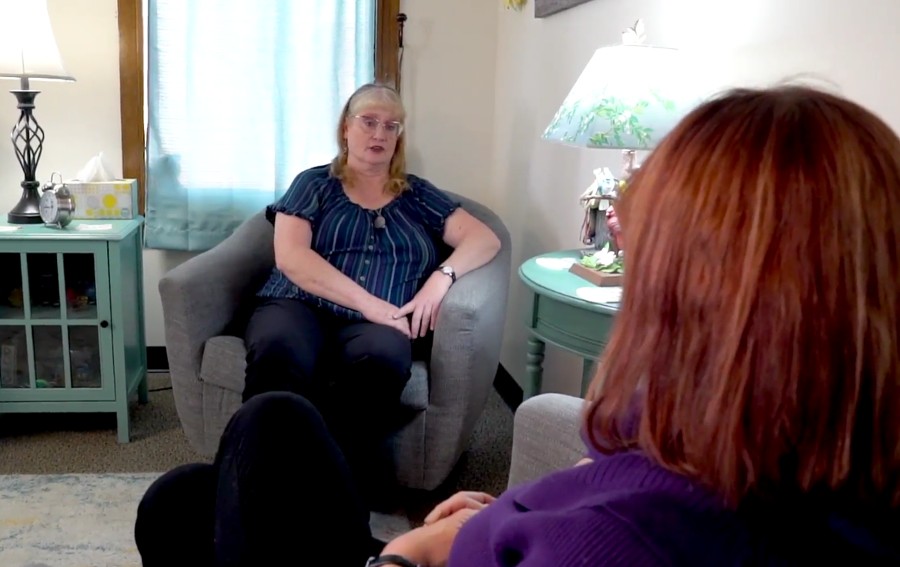
Meeting in person allows both therapist and client to notice subtle shifts in tone, body language, and emotion in real time. Being in a dedicated therapy space can also reduce distractions and help clients stay fully present during sessions.
Telehealth Therapy
Telehealth may be helpful when travel or health concerns make in-person sessions difficult.
Telehealth can be a good option if:
- A medical condition limits mobility
- You are recovering from illness or surgery
- You are immunocompromised
- Severe weather makes travel difficult
- Temporary life circumstances make attending in person challenging
- The most effective therapy is the one you can attend consistently.
A Final Thought
Seeking therapy is not a sign of weakness.
You do not need a diagnosis.
You do not need a crisis.
You only need willingness to explore whether support could help you move forward.
Page Content written and clinically reviewed by
Laura L. Kietell, MSW, LCSW
Thrive Counseling Services